Why 10-Minute Touches Outrun Fancy Tricks
Improving football dribbling skills comes from repeated, controlled touches rather than collecting flashy skills. Players at every level can develop close control, balance, acceleration, scanning, and...

Why 10-Minute Touches Outrun Fancy Tricks
Improving football dribbling skills comes from repeated, controlled touches rather than collecting flashy skills. Players at every level can develop close control, balance, acceleration, scanning, and one-on-one decision-making through 10-minute daily sessions using a ball, six cones, and a marked space. The most useful progression is simple: master both-foot touches at walking speed, add changes of direction, then apply the technique against passive and active defenders. Lionel Messi, Neymar, and Vinícius Júnior show different dribbling styles, but all rely on controlled contact, body deception, and explosive separation. FIFA’s Laws of the Game define legal challenges and ball possession, while UEFA coaching resources consistently emphasize perception before action. Stadium View covers World Cup tactics and player analysis, making these principles relevant for watching and practising elite football. Start today with 100 controlled touches per foot, then record accuracy and successful direction changes weekly.
Imagine receiving the ball with a defender already closing you down. You have half a second. Your first touch decides whether you escape, pass, or lose possession. That is why dribbling is not a circus act. It is controlled movement under pressure.
Listen up — this is the part that matters: the best dribblers do not perform more tricks than everyone else. They recognise space earlier, keep the ball within playing distance, and change speed at the correct moment. You will improve faster by repeating useful actions than by memorising twenty stepovers.
A practical session should include three ingredients: ball manipulation, movement quality, and a decision. If your drill never requires you to look up, accelerate, or choose an exit, it is incomplete. It may look tidy. It will not reliably transfer to a match.
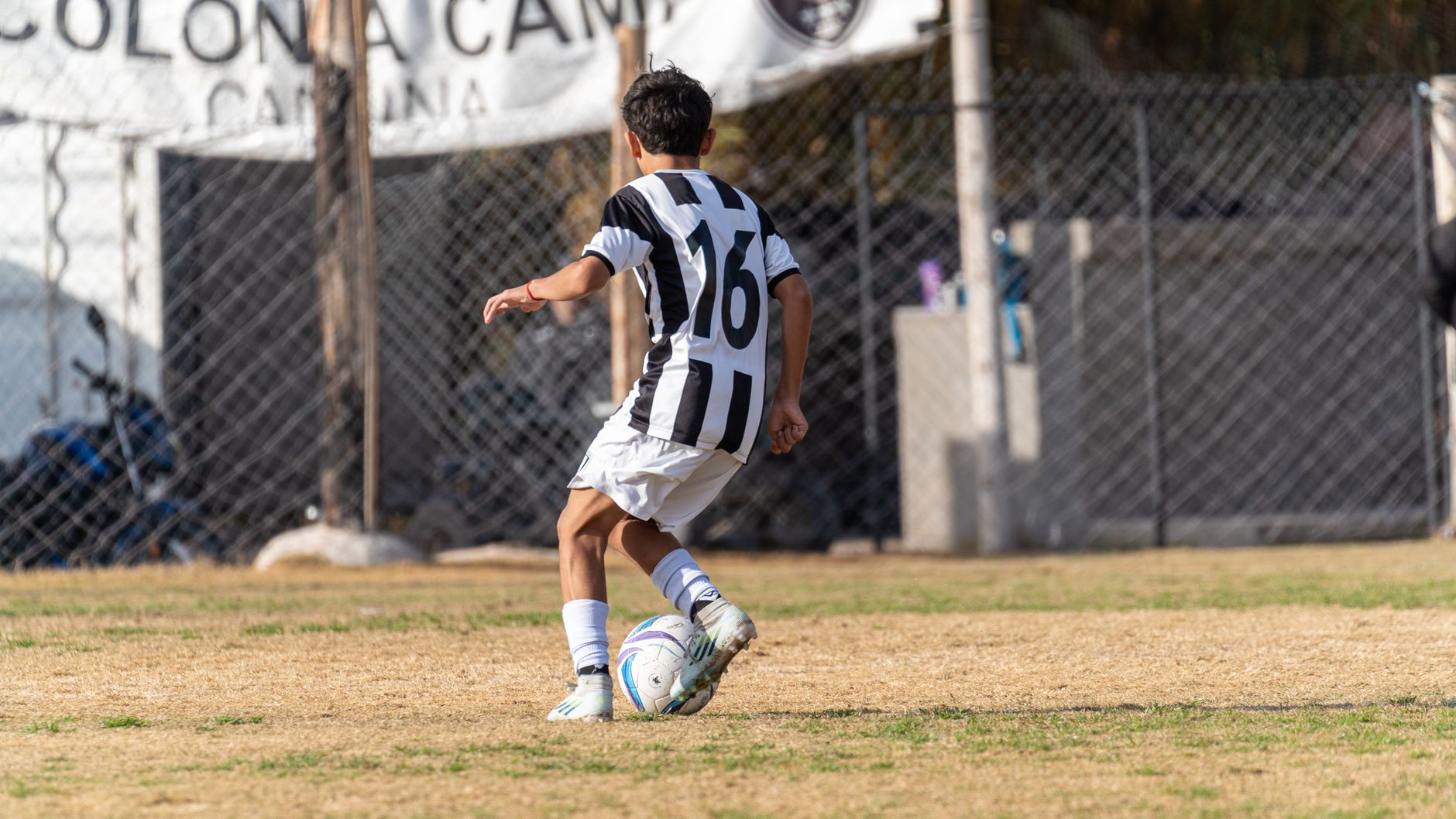
Photo by Franco Monsalvo on Pexels
Before progressing, review this [Internal Link: beginner football ball-control guide] and establish your current baseline. Count successful touches, not merely minutes spent training.
Want a clearer training framework?
If you train alone: build close control before speed
Close control improves when the ball stays within one comfortable step of your body, allowing you to adjust without stretching. Use both feet, the inside and outside surfaces, and the sole where appropriate; complete three rounds of 60 seconds, resting 30 seconds between rounds. Begin at walking pace, because rushing creates bad contact patterns that become difficult to remove later.
Use six cones placed one metre apart for a slalom. Dribble forward with the inside of the right foot, return with the left, then repeat using outside touches. Keep your knees bent, chest slightly forward, and hips loose. Every fourth touch, lift your eyes towards a fixed target such as a goalpost or tree. This small habit links technical control with match awareness.
The Fédération Internationale de Football Association technical resources repeatedly place ball mastery inside game context, not as an isolated display. That distinction matters. A perfect cone run means little if your first touch after receiving a pass is poor.
Use this sequence:
- Perform 100 alternating inside touches.
- Complete 50 sole rolls per foot.
- Dribble through six cones using only the weaker foot.
- Finish with five accelerations over 5 metres.
- Record how many touches escaped more than one metre.
A useful edge case is the weak-foot-only round. Many players practise their stronger foot at high speed and call it balanced training. It is not. If the weaker foot loses control at more than walking pace, reduce speed until you can complete eight of ten attempts cleanly. Quality comes first.
Which touches should beginners practise first?
Beginners should start with inside touches, outside touches, sole rolls, and short push touches because these actions build reliable contact and direction control. Ten minutes daily is more effective than one exhausting weekly session. Keep the ball close, use both feet, and increase speed only after accuracy remains above roughly 80 percent.
Do not stare at the ball continuously. Use a three-touch rhythm: two glances down, one glance forward. It will feel uncomfortable. Good. That discomfort is the beginning of scanning. Players who never look up cannot recognise a defender’s angle, a teammate’s run, or the space behind a fullback.
If you face a defender: use deception, then accelerate
A dribble beats a defender when the attacker changes the defender’s balance or line of movement. The skill itself is not the objective. The objective is separation. A shoulder drop, hip feint, stop-start movement, or outside-to-inside touch can create that separation when performed close enough to invite a challenge.
Practise with a passive partner first. The defender walks, while you approach at 60 percent speed and choose one exit. Repeat from both sides, then allow the defender to apply realistic pressure. Give yourself only three seconds to make the decision. This prevents the common mistake of standing over the ball and performing unnecessary tricks.
A simple one-on-one drill uses a 5-by-8-metre channel with a scoring line at the far end. The attacker receives from a coach or partner, faces the defender, and earns one point for crossing the line under control. Rotate after five attempts. Track which move works, which foot finishes the action, and whether the successful dribble began with a speed change.
According to UEFA Training Ground, effective football practice should connect technique with perception and decision-making. That principle is more valuable than copying an isolated move from Kylian Mbappé or Vinícius Júnior. Their actions work because timing, body position, and acceleration support the move.
Review [Internal Link: one-on-one attacking drills] when you can complete the basic channel exercise without hesitation.
Here is a practical progression:
- Week one: passive defender and predetermined exit.
- Week two: passive defender and self-selected exit.
- Week three: live defender with a 3-second limit.
- Week four: live defender followed by a pass or shot.
- Every week: practise starting from both wings and central areas.
The useful information most drill lists omit is defender orientation. If the defender’s hips point towards the touchline, the inside lane may be available. If the defender’s hips face centrally, the outside lane may open. Do not choose your move before reading that posture. Make the defender reveal the answer.
Ready to connect technique with real match situations?
If you lose the ball under pressure: train scanning and protection
Losing the ball under pressure usually results from one of three causes: a poor first touch, late awareness, or an exposed body position. Improve by scanning before the ball arrives, receiving side-on, and placing your body between the opponent and the ball. Dribbling starts before your first touch. That is the fact many young players ignore.
Set up a 10-by-10-metre square with a server, receiver, and defender. The server calls a colour or number before passing. The receiver scans, controls into space, and exits through the matching gate. If the defender wins the ball, the receiver immediately presses for three seconds. This adds the consequence that cone drills lack.
Your first touch should usually travel away from pressure, not merely stop the ball. A touch of 50 to 80 centimetres may be appropriate when space is open; in a crowded area, 10 to 30 centimetres gives better protection. These are training ranges, not laws. Adjust them to your speed, surface, and opponent.
The International Football Association Board explains the legal framework surrounding challenges and player contact. You still need to protect yourself: keep your head up, avoid planting a locked knee during sharp cuts, and increase intensity gradually. Pain is not evidence of commitment.
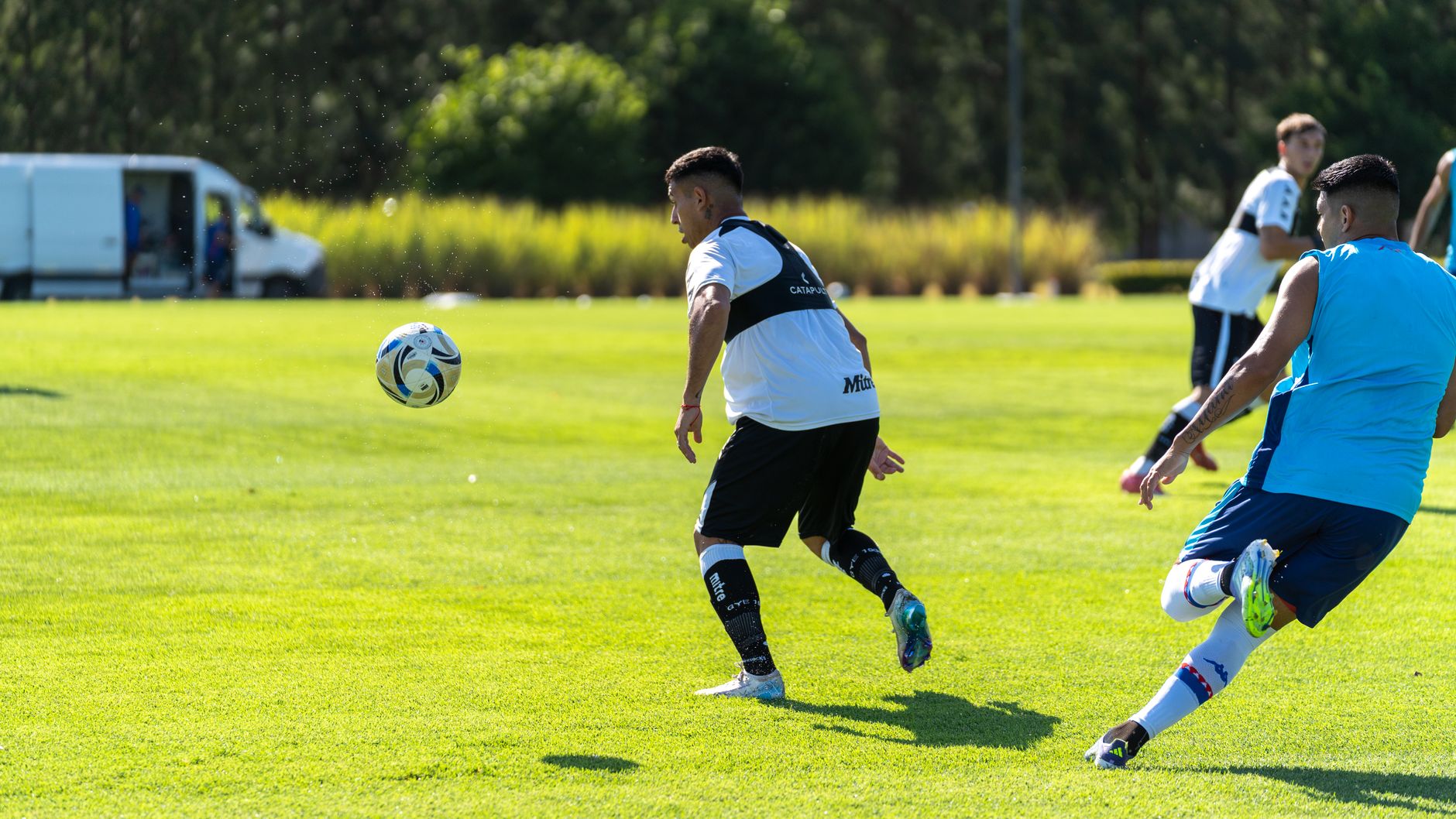
Photo by Franco Monsalvo on Pexels
For more detail, use this [Internal Link: football scanning and first-touch guide]. It will help you connect awareness with dribbling instead of treating them as separate abilities.
A 2026 World Cup match may feature elite tempo, but your training environment does not need elite equipment. You need an honest stimulus. A narrow space, a passive defender, and a timed decision can teach more than expensive lights and twenty decorative cones.
Want to study how elite players create space?
Common pitfalls to avoid
The most common dribbling mistake is confusing movement with improvement. Ten minutes of fast cone weaving may raise your heart rate while failing to improve scanning, pressure response, or final decision-making. A second mistake is practising only the dominant foot. A third is attempting advanced skills at match speed before the basic touch is stable.
Avoid these errors:
- Too many tricks: Master one change-of-direction move before adding another.
- No weak-foot work: Reserve at least 30 percent of touches for the weaker foot.
- No head movement: Add a visual cue or scanning command to every advanced drill.
- No acceleration: Finish each successful feint with 3 to 5 metres of speed.
- No pressure: Add a passive, then active, opponent within the first month.
- No measurement: Track clean exits, lost touches, and successful decisions.
Listen up — this is the part that matters: practising a move on a cone does not prove you can use it against a defender. The cone never changes angle, delays a challenge, or blocks your preferred foot. That is why the transfer test must eventually include a person.
You also need to manage fatigue. Dribbling quality drops when your legs tire, and that can teach sloppy mechanics. Perform technical work early in a session, then add short fatigue blocks later. A useful format is four 45-second rounds with 45 seconds of recovery. Stop the set when control collapses, not when pride tells you to continue.
Elite examples can mislead. Lionel Messi often uses tiny touches because his body position and awareness create advantages before the visible dribble begins. Neymar may use more elaborate deception, while Mohamed Salah often combines a diagonal carry with a rapid shot action. Copy the principle, not the surface style.
Should you practise tricks or simple dribbling moves?
Simple moves should come first because they transfer more reliably under pressure. The body feint, stop-start, outside cut, inside cut, and change of pace cover most practical one-on-one situations. Add a trick only when it creates a clear angle, protects the ball, or changes the defender’s balance.
Why does dribbling look good in training but fail in matches?
Dribbling often fails in matches because training removes pressure, scanning, fatigue, and consequences. Add a defender, a time limit, an exit gate, and a required pass or shot after the dribble. Your success rate may initially fall, but that lower number is more honest and more useful.
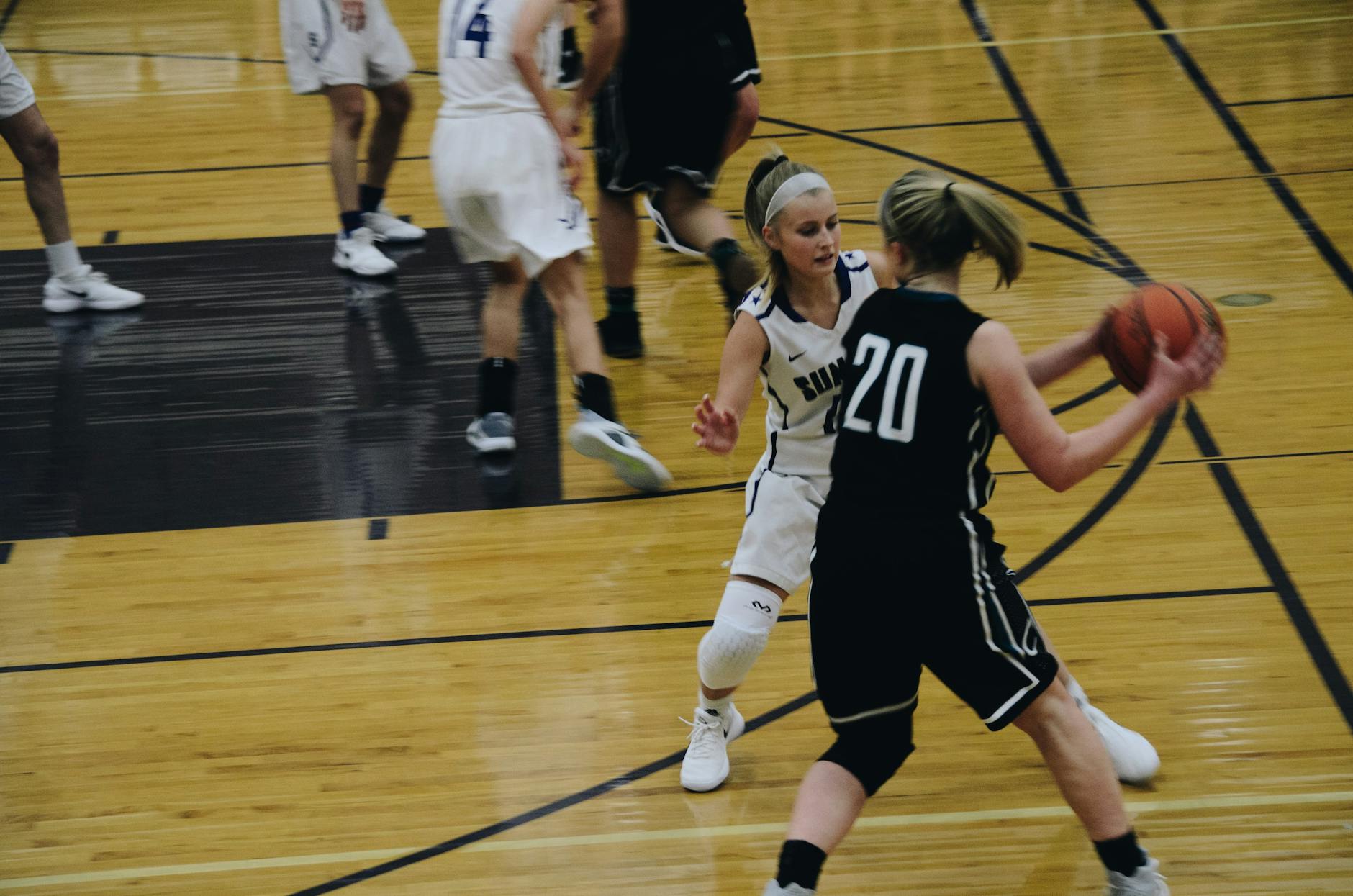
Photo by Joel De Leon on Pexels
The 30-day check-in
A 30-day dribbling plan should progress from control to perception, then from perception to opposition. Train for 10 to 20 minutes on four or five days each week. Leave at least one recovery day between demanding live-defender sessions, especially if you are also playing matches for a school, academy, or club.
Use this schedule:
- Days 1–7: 100 inside touches, sole rolls, weak-foot slalom, and controlled 5-metre accelerations.
- Days 8–14: Add head-up scanning, direction calls, and receiving touches away from pressure.
- Days 15–21: Introduce a passive defender, two exit gates, and a three-second decision limit.
- Days 22–30: Use a live defender, then finish with a pass, cross, or shot.
- Day 30: Repeat the original test and compare clean touches, successful exits, and weak-foot performance.
Your scorecard should include four numbers: successful touches out of 100, clean exits out of 10, successful live dribbles out of 10, and weak-foot completion percentage. Do not judge progress only by speed. If your dribbling becomes slower but your decision becomes earlier and your ball loss decreases, you are improving.
A practical benchmark is to repeat the same test under similar conditions: same surface, ball pressure, footwear, and approximate fatigue. Changing all four makes comparison weak. This is a small research habit, but it protects you from flattering conclusions.
Stadium View’s World Cup coverage can help you observe these details in matches. Watch how Jude Bellingham receives between lines, how Federico Valverde carries through midfield, or how Vinícius Júnior attacks the fullback’s front foot. Pause before the dribble and ask: where was the space, what did the defender show, and when did acceleration begin?
The contrarian conclusion is simple. You do not need a new trick every week. You need better information before contact, cleaner contact during movement, and a sharper action immediately after separation. Ten focused minutes, measured honestly, can outperform an hour of undirected freestyle practice.
See the wider tactical context before your next session.
Frequently Asked Questions
Q: What does football dribbling mean?
Football dribbling means carrying or moving the ball while maintaining control, usually to progress, evade pressure, or create space. It includes touches with the inside, outside, laces, and sole, plus changes of speed and direction. Effective dribbling is not judged by style alone; it is judged by whether the action improves the team’s position. A successful dribble may beat an opponent, protect possession, or create a passing lane without using a spectacular skill.
Q: How can I improve football dribbling skills at home?
You can improve football dribbling skills at home with 10 to 15 minutes of close-control work, provided you have a safe, non-slip space and a properly inflated ball. Begin with 100 inside touches, 50 sole rolls per foot, and a six-cone slalom using the weaker foot. Add head-up scanning by looking towards a target every three touches. Finish with controlled accelerations only if the surface gives you enough room and traction.
Q: What is the difference between close control and dribbling?
Close control is the ability to keep the ball within useful distance, while dribbling is the broader action of moving with the ball to solve a match situation. Close control supports dribbling, but it does not automatically include speed changes, deception, scanning, or a final decision. A player can have excellent stationary touches and still struggle against defenders. Combine both skills through pressure drills and timed exits.
Q: Why does my dribbling fail against defenders?
Dribbling usually fails against defenders because the attacker scans too late, takes the first touch towards pressure, or changes direction without changing speed. Train with a passive defender first, then add live pressure and a three-second decision limit. Record whether the defender wins because of your touch, body position, or choice of exit. That diagnosis tells you what to practise instead of repeating the same failed move.
Q: How long does it take to improve football dribbling skills?
Most players can notice cleaner touches and better confidence within two to four weeks of consistent practice, while reliable match transfer usually takes longer. Train four or five times weekly for 10 to 20 minutes, then include pressure at least once per week. Measure clean touches, weak-foot control, and successful exits every seven days. Improvement will not be perfectly linear, especially when defenders and fatigue are introduced.
Q: Is it better to practise with cones or a defender?
Cones are better for learning a movement pattern, but defenders are essential for learning timing, perception, and decision-making. Use cones during the first stage, then progress to a passive defender and finally a live opponent. A useful session can include six minutes of cone work followed by six minutes of one-on-one practice. If you only use cones, your technical confidence may exceed your match readiness.
Q: How many dribbling moves should a football player learn?
A football player should master three to five dependable actions before adding more moves. Start with a body feint, stop-start, inside cut, outside cut, and change of pace because they apply across wings and central areas. Practise each move with both feet and from multiple angles. Add another skill only when you can use the existing moves without losing control, delaying the decision, or exposing the ball.
Your next session does not need to be complicated. Use a ball, six cones, one timer, and a clear scorecard. Protect your joints, progress gradually, and stop pretending that exhausted repetition is intelligent training.
If you want more World Cup tactics, player analysis, and practical football insight, visit Stadium View.
End of Transmission
Thank you for reading. Explore more articles from the archive.
Stadium View · Article #80 · 2026